
The Practice of Joy
A Practice of Wisdom

The Practice of Joy: A Practice of Wisdom
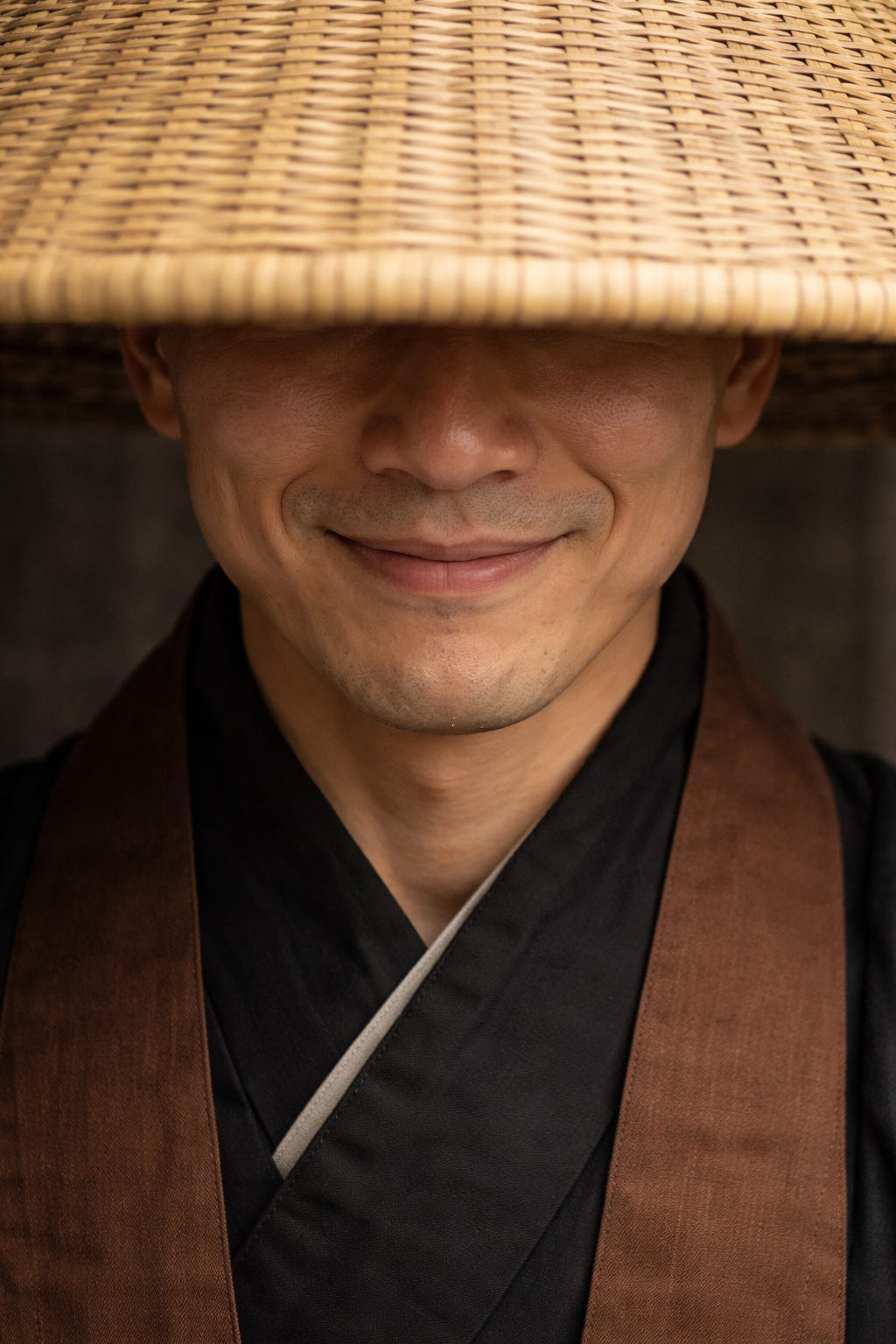
By Darren (So Mushin) Simpson
Let me start with something that might sound strange for a Buddhist to say:
If our practice doesn’t give rise to joy, something’s missing.
But I want to be very clear about the kind of joy I’m talking about. Not the surface happiness that comes from getting what we want. Not the dopamine hit of praise, success, or distraction. I’m talking about something far deeper—a joy that arises from clarity, from ethical living, from presence, and from wisdom itself.
And here’s the part we don’t always talk about enough:
What brings us joy matters.
It tells us something about where our heart is oriented. It tells us what we’re cultivating. In that sense, joy itself becomes a form of discernment.
The Buddha Didn’t Teach a Gloomy Way
The Buddha never taught a spirituality of bleak endurance. Yes, he began with dukkha— unsatisfactoriness—but he didn’t stop there. He taught the end of this unsatisfactoriness. And the lived experience of that freedom is not neutral. It’s luminous. (*Dukkha does not equal “suffering” linguistically)
In the early texts, joy is not a side effect. It’s an essential condition for awakening:
“From gladness comes joy; from joy comes tranquility; from tranquility comes happiness; from happiness comes concentration.”
— Anguttara Nikāya 11.1
That’s not poetic sentiment. It’s psychological and spiritual engineering.
Joy (pīti) steadies the heart. A steady heart supports concentration. Concentration clarifies perception. And clear seeing gives rise to wisdom.
But there’s something subtle here: not all joy leads in that direction.
Some pleasures agitate the mind. Some joys strengthen craving. Some delight reinforces the very habits that keep us bound.
So the Buddha didn’t just teach joy—he taught wise joy.
What We Take Joy In Reveals the Path We’re On
This is where discernment comes in.
If I feel joyful when I dominate a conversation, that tells me something.
If I feel joy when I consume, acquire, or compare, that tells me something too.
If my happiness depends on being right, being admired, or being in control—then my joy is still conditioned by self-grasping.
But when I feel joy in:
– generosity
– stillness
– ethical conduct
– honest attention
– compassion for others
– letting go rather than holding on
…then something different is happening.
The Buddha spoke directly to this in his teachings on wholesome and unwholesome states. He didn’t ask us merely to notice what feels good—he asked us to see what leads toward freedom and what leads toward entanglement.
“Whatever leads to dispassion, to freedom, to peace, to direct knowledge, to awakening, to Nibbāna—this you may hold as the Dhamma.”
In other words: not all happiness is liberating, but some joy points directly toward wisdom.
Joy as a Factor of Awakening
This is why joy is built into the path itself. In the Seven Factors of Awakening, joy sits right at the center:
Mindfulness
Investigation
Energy
Joy
Tranquility
Concentration
Equanimity
Joy doesn’t appear after awakening—it actively supports it. But it’s not random joy. It arises specifically from skillful states of mind: presence, ethical conduct, insight, and compassion.
Zen expresses this in a different language, but the same principle applies. Dōgen wrote:
“When you find your place where you are, practice occurs, actualizing the fundamental point.”
When we stop chasing and start inhabiting this moment fully, there’s often a quiet joy that isn’t based on getting anything. That joy isn’t excitement—it’s rightness. It’s the heart recognizing that it’s no longer at war with reality.
Finding Joy in the Small, True Things
I don’t find my deepest joy in “spiritual experiences.” I find it in the smallest moments:
The sound of the bell.
The way breath arrives without being asked.
The feeling of sweeping a floor with nothing left over.
Thich Nhat Hanh said:
“Walk as if you are kissing the Earth with your feet.”
That’s not romantic language—it’s a discipline of attention.
And here’s where discernment lives:
If what brings me joy is speed, noise, stimulation, or self-importance, then my heart is still chasing.
If what brings me joy is simplicity, presence, kindness, and non-grasping, then wisdom is already taking shape.
Zen says, “Ordinary mind is the Way.” But not the distracted ordinary mind—the mind that’s awake to what it’s actually doing.
Joy Doesn’t Deny Suffering—It Refines Our Relationship to It
Cultivating joy doesn’t mean pretending life is easy. Buddhism doesn’t teach denial.
The Dalai Lama reminds us:
“Happiness is not something ready-made. It comes from your own actions.”
And those actions include how we relate to pain, injustice, aging, and loss.
Jack Kornfield puts it beautifully:
“Joy is not the absence of difficulty but the capacity to live fully in the midst of it.”
This kind of joy doesn’t anesthetize suffering—it transforms our posture toward it. We stop asking only, How do I escape this? and begin asking, How do I meet this wisely?
That shift is discernment. And from it, a deeper joy emerges—one that can coexist with grief, fear, and uncertainty without being destroyed by them.
Joy as Ethical Expression
Joy isn’t just something we feel. It’s something we enact.
The Buddha taught that our speech, our livelihood, our intentions, and our actions shape both our world and our mind. When we speak honestly, act gently, and respond with patience, we’re not just being “kind.” We’re cultivating the conditions for a joy that isn’t dependent on outcome.
Shantideva wrote:
“All the joy the world contains has come through wishing happiness for others.”
And Suzuki Roshi said:
“The most important thing is to find joy in what you are doing.”
Not because it makes life easier—but because it reveals whether our actions are aligned with wisdom or with ego.
Becoming a Beacon of Discerned Joy
There’s a phrase in the tradition I return to again and again:
“This is the Way.”
Not as a slogan—but as a way of being.
When our joy arises from ethical living, from clarity, from letting go rather than grabbing on, it naturally radiates outward. People feel it. They may not know a sutra from a koan, but they know when someone is grounded, kind, and at ease.
That joy doesn’t persuade. It demonstrates.
“Acquire a spirit of peace, and thousands around you will be saved…”
St. Seraphim of Sarov
It says, without words:
There is another way to live. One that isn’t driven by fear or hunger for more.
And in that sense, joy itself becomes wisdom made visible.
Closing
So yes—joy belongs at the heart of our practice. But not just any joy.
We’re called to examine what delights us.
To ask what strengthens clarity and what strengthens craving.
To notice which joys liberate and which merely distract.
Going on around us are the myriad happenings and wonders of existence. The ten thousand joys and the ten thousand sorrows all occurring within this instant… this moment.
Oh, but what a wonder that they are all occurring!
The Buddha described the awakened life as blissful. Zen masters described it as at ease. Modern teachers call it freedom.
I call it joy with discernment—a joy that knows where it comes from, and where it leads.
Not flashy.
Not fragile.
But steady enough to walk this world and say, with our very lives:
This… is the Way.
Bibliography
Primary Buddhist Sources
Anguttara Nikāya 11.1
Samyutta Nikāya
Śāntideva. The Way of the Bodhisattva (Bodhicaryāvatāra). Shambhala, 2007.
Zen and Mahāyāna Sources
Dōgen, Eihei. Shōbōgenzō. In Treasury of the True Dharma Eye. Trans. Kazuaki Tanahashi et al., Shambhala, 2010.
Suzuki, Shunryū. Zen Mind, Beginner’s Mind. Weatherhill, 1970.
Thich Nhat Hanh. Peace Is Every Step. Bantam, 1991.
Thich Nhat Hanh. The Heart of the Buddha’s Teaching. Broadway Books, 1998.
Modern Teachers
Kornfield, Jack. A Path with Heart. Bantam, 1993.
Kornfield, Jack. After the Ecstasy, the Laundry. Bantam, 2001.
A practice I find myself recommending to others who are feeling depressed, down about the world, or having a hard time containing negative feelings - is that of Mudita, or sympathetic joy/joy for others. It's such a powerful antidote to inward negativity - whether one does it online (finding people on Facebook or elsewhere to celebrate a victory with/wish well to/feel good for) or out in the world (that child in the park discovering the swings for the first time? those people greeting each other at the airport after too long apart? that is some joy to witness right there). As you so rightly point out, joy is a central practice in Buddhism - finding it in others can help us locate it in ourselves!
nicely done
three bows